The toddler years are an exciting time of growth, discovery, and communication. One day your child is babbling and pointing, and before long they’re asking questions, sharing stories, and expressing their thoughts in increasingly complex ways.
Speech and language development is one of the most important aspects of early childhood development. Strong communication skills help children build relationships, express their emotions, develop confidence, and prepare for future learning.
The good news is that supporting your toddler’s speech and language development doesn’t require special equipment or formal lessons. Some of the most powerful learning opportunities happen during everyday interactions at home, from reading books and singing songs to chatting during mealtimes and play.
At Jacaranda Early Learning Centre, we see first-hand how children develop communication skills through meaningful interactions with educators, peers, and family members. By working together, families and early childhood educators can help children build strong foundations for lifelong learning.
Why Speech and Language Development Matters
Many people use the terms “speech” and “language” interchangeably, but they refer to different aspects of communication.
Speech is the physical ability to produce sounds and words.
Language refers to understanding and using words, gestures, and communication to express ideas, needs, and feelings.
Both skills are closely connected and develop rapidly during the first few years of life.
Strong speech and language skills support a child’s ability to:
- Build friendships and social connections
- Express wants, needs, and emotions
- Follow instructions and routines
- Participate in play and group activities
- Develop early literacy skills
- Build confidence and independence
- Prepare for kindergarten and school
The first five years are particularly important because a child’s brain is developing at an extraordinary rate. Every conversation, story, song, and interaction helps strengthen the connections that support communication and learning.
Understanding Toddler Speech and Language Milestones
Every child develops at their own pace, so milestones should be viewed as general guides rather than strict rules.
Around 12–18 Months
Many children begin to:
- Say a few simple words such as “mama,” “dada,” or familiar object names
- Respond when their name is called
- Understand simple instructions
- Use gestures such as pointing, waving, or reaching
- Copy sounds and simple words
Around 18–24 Months
Children may begin to:
- Use 20–50 words or more
- Name familiar people, objects, and animals
- Follow simple directions
- Combine two words together, such as “more milk” or “big truck”
- Enjoy songs, rhymes, and books
Around 2–3 Years
Many toddlers begin to:
- Use short sentences
- Ask simple questions
- Follow two-step instructions
- Participate in simple conversations
- Be understood by familiar adults most of the time
It’s important to remember that there is a wide range of normal development. Some children are early talkers, while others take a little longer to find their voice.
10 Practical Ways to Support Speech and Language Development at Home
The best way to encourage communication is to make language part of everyday life. Here are ten simple and effective strategies that families can use at home.
1. Talk Throughout the Day
One of the easiest ways to support language development is to talk to your child during everyday activities.
Narrate what you’re doing as you prepare meals, go shopping, fold washing, or play together.
For example:
- “We’re cutting up some strawberries for morning tea.”
- “Let’s put on your blue shoes.”
- “The dog is running really fast.”
These simple conversations expose children to new words, sentence structures, and concepts while helping them connect language with real-life experiences.
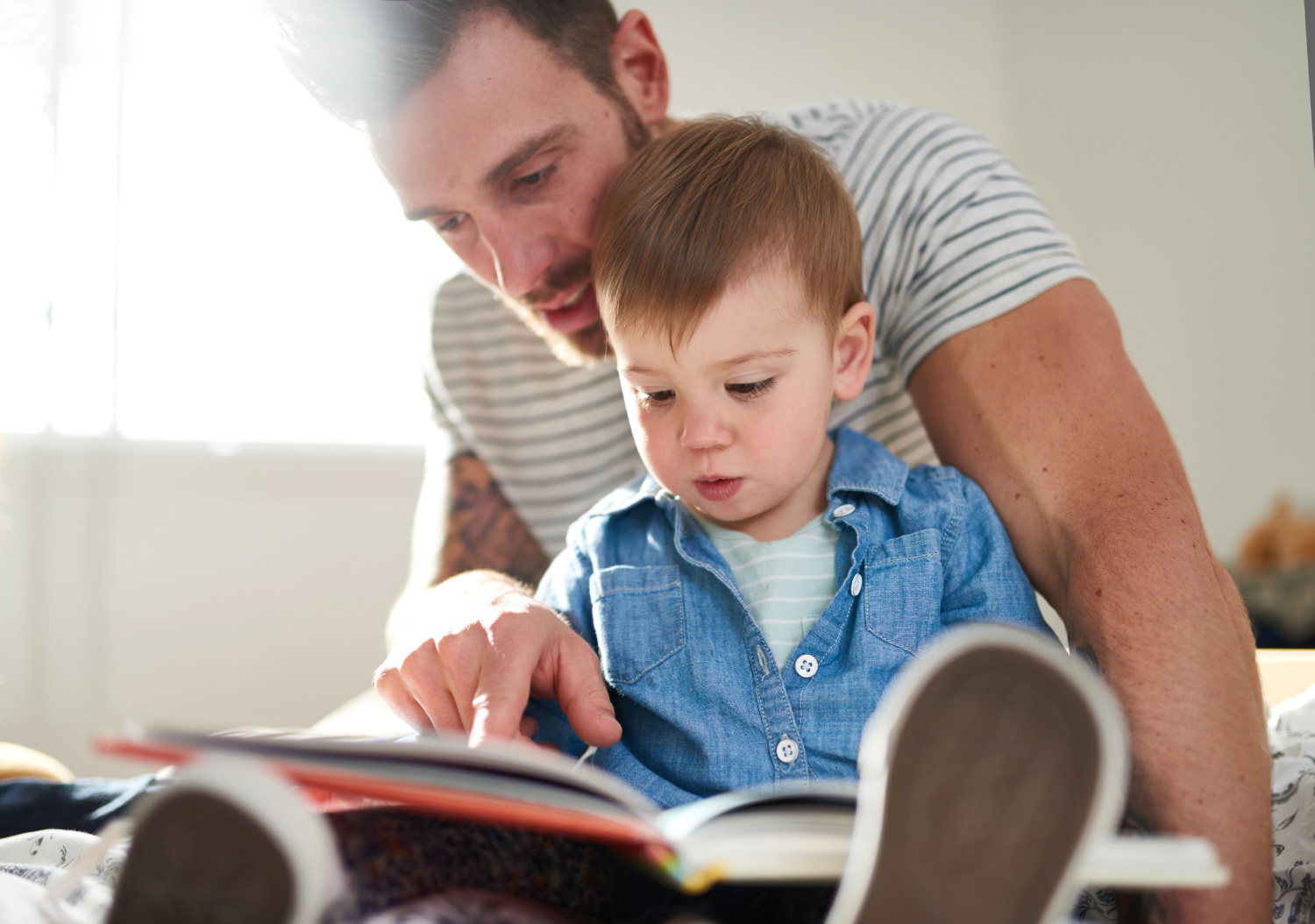
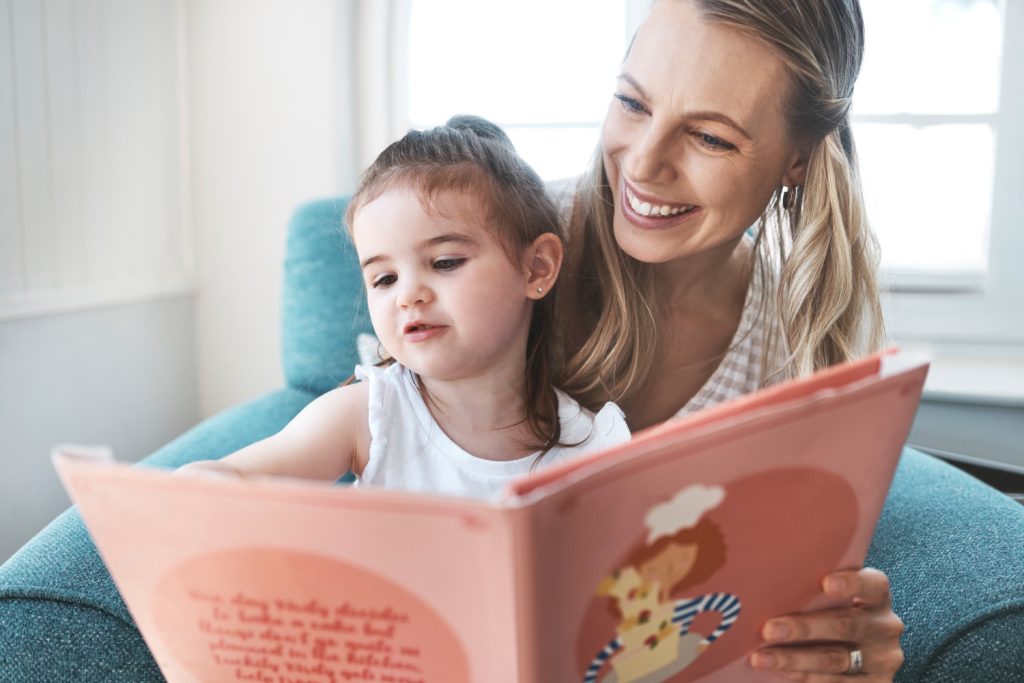
2. Read Together Every Day
Reading is one of the most powerful ways to support language development.
Even if your toddler doesn’t sit still for an entire story, shared reading experiences help build vocabulary, listening skills, comprehension, and a love of books.
When reading together:
- Point to pictures and name objects
- Ask simple questions
- Encourage your child to turn pages
- Talk about what’s happening in the story
- Re-read favourite books regularly
Children often learn through repetition, so don’t be surprised if they request the same book night after night.
3. Get Down to Your Child’s Level
Face-to-face interactions help children learn how communication works.
When talking with your toddler, try getting down to their eye level. This allows them to clearly see your facial expressions, mouth movements, and gestures.
Eye contact and shared attention help children connect words with meaning while strengthening social communication skills.
4. Expand on What Your Child Says
When your child uses a word or short phrase, build on it by adding extra information.
For example:
- Child: “Car.”
Parent: “Yes, that’s a big red car.” - Child: “Dog run.”
Parent: “The dog is running very fast.”
This technique exposes children to more advanced language without placing pressure on them to repeat or imitate.
5. Sing Songs and Nursery Rhymes
Songs and rhymes naturally support language learning through repetition, rhythm, and predictable patterns.
Singing helps children develop:
- Listening skills
- Vocabulary
- Memory
- Sound awareness
- Sentence structure
Action songs are particularly beneficial because they combine movement with language, helping children connect words to actions and meanings.
6. Encourage Play-Based Learning
Play is one of the most effective ways young children learn.
Whether your child is building with blocks, playing with toy animals, cooking in a pretend kitchen, or caring for dolls, play creates countless opportunities for communication.
You can support language during play by:
- Describing what your child is doing
- Introducing new vocabulary
- Asking open-ended questions
- Joining in imaginative play scenarios
Pretend play is especially valuable because it encourages children to use language creatively.
7. Limit Passive Screen Time
While some educational programs can introduce new concepts and vocabulary, children learn language best through real-life interactions with responsive adults.
Conversations, play, reading, and shared experiences provide opportunities for children to practise communication skills in meaningful ways.
Rather than relying heavily on screens, try creating opportunities for interactive learning experiences throughout the day.
8. Give Your Child Time to Respond
Adults often speak quickly and move conversations along without realising how much time young children need to process information.
After asking a question or making a comment, pause and give your child time to respond.
Even a few extra seconds can make a significant difference. This waiting time encourages children to organise their thoughts, find the words they need, and participate more actively in conversations.
9. Encourage Choices
Offering choices motivates children to communicate their preferences.
Instead of asking broad questions, provide simple options such as:
- “Would you like an apple or a banana?”
- “Do you want the red cup or the blue cup?”
- “Should we read the animal book or the truck book?”
These opportunities encourage children to use words while also developing independence and decision-making skills.
10. Follow Your Child’s Interests
Children are more likely to engage in conversations when the topic captures their attention.
If your child loves dinosaurs, trucks, animals, water play, or construction vehicles, use those interests as starting points for communication.
Talk about what they’re doing, ask questions, introduce new vocabulary, and expand on their ideas.
When children are engaged and interested, language learning often happens naturally.
How Child Care Supports Speech and Language Development
While home experiences are incredibly important, quality early learning environments provide additional opportunities for children to develop communication skills throughout the day.
Rich Conversations Throughout the Day
At Jacaranda Early Learning Centre, communication is woven into daily routines.
Educators engage children in meaningful conversations during:
- Meals and snack times
- Group learning experiences
- Outdoor play
- Creative activities
- Daily routines and transitions
Learning Through Play
Play-based learning provides countless opportunities for children to use language naturally.
Whether children are participating in dramatic play, storytelling, construction activities, music sessions, or collaborative games, educators intentionally support communication through questions, discussions, and shared experiences.
Learning From Other Children
Children learn a great deal from one another.
- Hear new words and phrases
- Practise turn-taking in conversations
- Develop social communication skills
- Build confidence speaking in group settings
These peer interactions often encourage children to experiment with new language and communication strategies.
Strong Partnerships With Families
Families and educators play an important role in supporting children’s communication development.
By sharing observations and working together, educators can help families understand their child’s progress and identify ways to support learning both at home and in the early learning environment.
Signs Your Child May Need Additional Support
Children develop at different rates, and variations in speech and language development are common.
However, it may be worth seeking professional advice if your child:
- Uses very few words by around 18 months
- Has difficulty understanding simple instructions
- Shows limited interest in communicating
- Is significantly harder to understand than other children of a similar age
- Stops using words or communication skills they previously demonstrated
If you have concerns about your child’s development, speaking with your GP, child health nurse, speech pathologist, or early childhood educator can help provide guidance and reassurance.
Creating a Language-Rich Home Environment
Supporting speech and language development doesn’t require expensive resources or structured lessons.
Simple ways to create a language-rich home include:
- Reading together daily
- Talking during routines and activities
- Singing songs and nursery rhymes
- Encouraging imaginative play
- Limiting background television
- Listening attentively when your child communicates
- Celebrating communication attempts
- Providing opportunities for conversation
The most valuable resource you can offer your child is your time, attention, and engagement.
Final Thoughts
Speech and language development is a journey that unfolds through everyday interactions, relationships, and experiences. While every child develops at their own pace, parents can make a significant impact by creating opportunities for conversation, play, reading, and connection throughout the day.
At Jacaranda Early Learning Centre, we are passionate about supporting children’s communication skills through nurturing relationships, play-based learning, and meaningful interactions. When families and educators work together, children receive the support and encouragement they need to become confident communicators and lifelong learners.
Jacaranda Early Learning is a childcare centre in Biggera Waters on the Gold Coast, and we warmly welcome new families to our centre! Contact us on 07 5500 5044 or fill out our online enquiry form to arrange a tour or to start the enrollment process.
Frequently Asked Questions
At what age should my toddler start talking?
Most children begin saying their first words around 12 months and start combining words between 18 months and 2 years. Development varies, and some children may reach these milestones earlier or later.
How can I encourage my toddler to talk more?
Talking regularly, reading books, singing songs, playing together, and responding positively to communication attempts are some of the most effective ways to encourage speech and language development.
Is it normal for toddlers to understand more words than they can say?
Yes. Most toddlers understand significantly more language than they can verbally express. Receptive language often develops before expressive language.
Does attending child care help speech development?
Quality early learning environments provide daily opportunities for conversations, storytelling, play-based learning, songs, group activities, and peer interactions, all of which support communication development.
Should I be worried if my toddler isn’t talking as much as other children?
Children develop at different rates. If you have concerns about your child’s speech or language development, it is a good idea to speak with your GP, child health nurse, speech pathologist, or early childhood educator.
Can bilingual children experience different language development patterns?
Yes. Children learning more than one language may spread their vocabulary across both languages. This is generally a normal part of bilingual language development and does not usually cause delays.
What role do educators play in supporting communication skills?
Educators create language-rich environments through conversations, storytelling, play experiences, songs, group activities, and meaningful interactions that help children build confidence and communication skills throughout the day.