

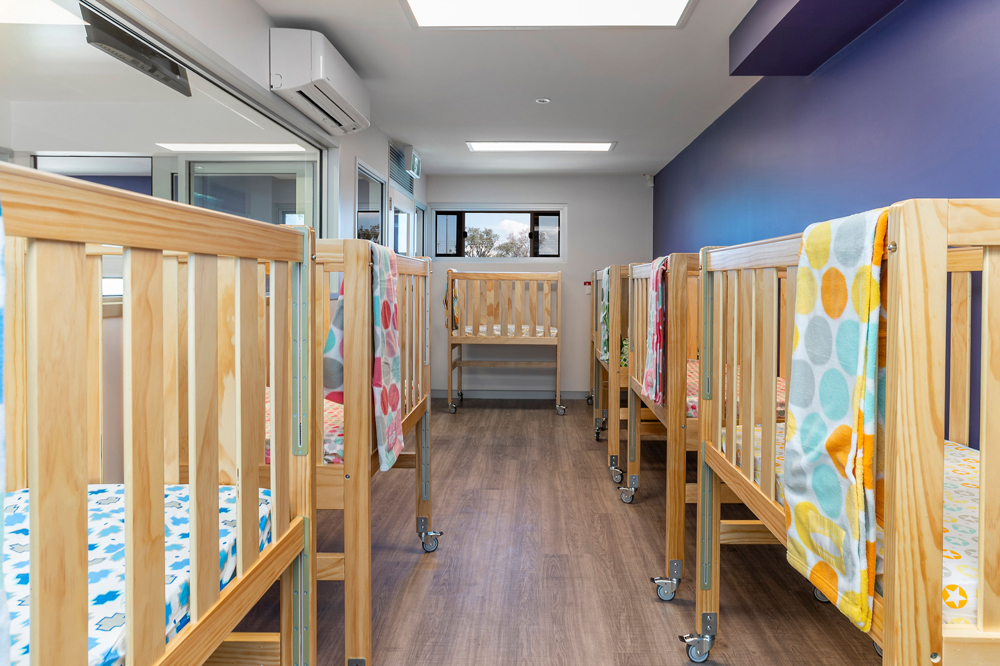
Sleep and rest are an important part of every child’s day, particularly during the early years when children are growing, learning and experiencing so much at once.
For parents preparing their baby or toddler for child care, sleep can also be a common concern. Will my baby sleep in a new environment? What if my toddler doesn’t want to nap? Will their home routine be disrupted? How are children supported during rest time?
At Jacaranda Early Learning Centre, children’s health, safety and wellbeing are central to the care we provide. Our approach is guided by the National Quality Standards, the Early Years Learning Framework and the Queensland Kindergarten Learning Guideline, supporting responsive care that recognises children’s individual ages, developmental stages and needs.
While sleep routines can look different for every child, safe and appropriate opportunities for sleep, rest and relaxation form an important part of a quality early learning environment.
Why Sleep and Rest Are Important in Early Childhood
Young children lead busy days. They are exploring their environment, developing physical skills, building relationships, learning new words and processing new experiences.
Sleep and rest provide valuable opportunities for children to recharge and support their overall wellbeing. Consistent routines can also help young children feel secure and understand what to expect throughout their day.
Appropriate sleep and rest can support:
- Physical health and growth
- Emotional wellbeing and regulation
- Concentration and engagement
- Memory and learning
- Energy for active play
- A child’s ability to participate in daily routines and experiences
Importantly, rest does not always mean sleep.
As children grow, their sleep needs change. A young baby may require several periods of sleep throughout the day, while an older toddler may have one nap. Some kindergarten-aged children may no longer sleep during the day but can still benefit from opportunities to slow down, relax and participate in quieter experiences.
Recognising these differences is an important part of responsive early childhood care.
What Does Safe Sleep Mean in Child Care?
Approved early childhood education and care services have responsibilities for children’s sleep and rest under the National Quality Framework.
The National Quality Standard recognises children’s wellbeing and comfort, including providing appropriate opportunities to meet each child’s need for sleep, rest and relaxation.
Safe sleep and rest practices also consider each child’s age, developmental stage and individual needs.
For babies, recognised safe sleep guidance includes placing babies on their back to sleep, keeping the head and face uncovered and providing a safe sleeping environment with appropriate sleep equipment and bedding.
Sleep and rest environments must also be considered carefully, including factors such as supervision, potential hazards, temperature, lighting and ventilation.
These practices are not simply about creating a quiet place for children to nap. They form part of a broader commitment to children’s health, safety and wellbeing throughout the day.
Our Approach to Sleep and Rest at Jacaranda Early Learning Centre
No two children have exactly the same sleep routine.
Some babies sleep frequently throughout the day. Some toddlers settle easily for a nap, while others need additional reassurance and time to wind down. Older children may prefer a quiet activity rather than sleep.
At Jacaranda Early Learning Centre, we recognise the importance of children’s individual needs and responsive early childhood care.
Educators can observe children’s cues, consider their developmental stage and communicate with families about their usual routines and changing needs.
Common signs that a young child may need sleep or rest can include:
- Yawning
- Rubbing their eyes
- Becoming less engaged in play
- Seeking comfort from an adult
- Increased crying or distress
- Difficulty regulating their emotions or behaviour
By getting to know each child, educators are better placed to recognise changes in behaviour and respond appropriately to their need for sleep, rest or a quieter experience.
Supporting Your Child’s Individual Sleep Routine
One of the most common questions parents ask when starting child care is whether their child’s home sleep routine can be followed.
Communication between families and educators is particularly valuable when it comes to sleep.
Parents and carers can share information about their child’s:
- Usual nap times
- Sleep cues
- Typical sleep duration
- Settling routines
- Comfort preferences
- Recent changes in sleep patterns
- Individual health or care needs
A child’s routine at child care may not always look exactly the same as their routine at home. An early learning centre is a different environment, with new experiences, activities, educators and other children.
However, understanding a child’s usual patterns can help educators provide responsive support and recognise when a child may be becoming tired.
Sleep needs also change quickly during early childhood. Ongoing communication allows families and educators to share observations as children grow and their routines evolve.
Safe Sleep for Babies in Child Care
Babies require particular consideration when it comes to safe sleep.
Red Nose Australia provides evidence-based safe sleep recommendations designed to reduce the risk of sudden infant death. Current guidance recommends that babies are placed on their back to sleep and have their head and face uncovered.
A safe sleep environment is also important. This includes an appropriate cot and a firm, flat mattress, with the sleep space kept free from soft or bulky items that may create a suffocation or overheating risk.
For early childhood education and care services, safe sleep and rest procedures must also consider the suitability of cots, bedding and sleep equipment, potential hazards and the adequate supervision and monitoring of sleeping children.
Babies can have very different sleep patterns, particularly during the first year of life. Rather than assuming every baby will sleep at the same time, responsive care considers individual sleep and rest needs.
Families are encouraged to talk openly with educators about their baby’s routine, sleep cues and any changes occurring at home.
Toddler Nap and Rest Routines
The toddler years often bring significant changes to daytime sleep.
Some toddlers continue to need a long daytime nap, while others begin sleeping for shorter periods. Some children may resist naps even when they are tired, and others gradually transition away from daytime sleep.
These changes are a normal part of early childhood development.
A responsive approach to toddler rest considers the individual child rather than assuming every toddler has identical sleep needs.
Educators can observe children’s behaviour and tired cues while also communicating with families about changes to routines at home.
It is also worth remembering that child care can be a busy and stimulating environment. Toddlers are engaging in active play, social interactions and new learning experiences throughout the day. Some children may initially appear more tired when they begin care or move into a new room.
As children become familiar with their environment and build secure relationships with educators, daily routines can also become more predictable and comfortable.
What If My Child Doesn’t Sleep at Child Care?
It is common for parents to worry that their child won’t sleep in a new environment.
Some children settle into child care sleep routines quickly. Others need more time to feel comfortable resting away from home. Like many aspects of starting child care, settling into new sleep and rest routines can take time.
Familiarity and secure relationships can play an important role in helping young children settle. Calm transitions, reassuring interactions and consistent routines can help children understand when it is time to slow down and rest.
Educators also become more familiar with each child’s individual cues and preferences over time.
It is important, however, to recognise that children cannot simply be “made” to sleep.
If your child is having difficulty sleeping at child care, speak with their educators. Sharing information about changes at home, recent sleep patterns or strategies that help your child settle can support a collaborative approach.
Rest Routines for Children Who No Longer Nap
Not every child attending an early learning centre needs a daytime nap.
As children grow, their sleep needs naturally change. For some older toddlers and kindergarten-aged children, rest may involve slowing down and participating in a calm experience rather than sleeping.
Quiet and restful experiences may include:
- Looking at books
- Listening to stories
- Calm music
- Relaxation experiences
- Other quiet, low-stimulation activities
The Queensland Kindergarten Learning Guideline recognises rest and relaxation as part of children’s understanding of healthy lifestyles and wellbeing. It also supports children in developing an awareness of their body’s needs and making choices that contribute to their health.
Providing opportunities for rest and relaxation can help children recharge while respecting their changing developmental needs.
Creating a Calm and Comfortable Rest Environment
Transitioning from energetic play to sleep or rest can take time, particularly for young children.
Calm, predictable routines can help signal that it is time for the body and mind to slow down.
In an early learning environment, this may involve reducing stimulation and providing comfortable, appropriate spaces where children can sleep or rest.
The physical environment is also an important part of safe sleep and rest planning. Early childhood services need to consider factors such as:
- The arrangement of sleep and rest areas
- Appropriate cots, beds and bedding equipment
- Potential hazards
- Temperature
- Lighting
- Ventilation
- Supervision and monitoring
Creating a supportive rest environment is about balancing children’s safety with their individual comfort and wellbeing.
Working With Families Around Sleep and Rest
Families know their children best.
The Early Years Learning Framework and Queensland Kindergarten Learning Guideline both recognise the important role of families and collaborative partnerships in children’s learning, development and wellbeing.
When it comes to sleep and rest, open communication can help educators better understand each child’s individual needs. Early childhood educators play an important role in building responsive relationships with children and working collaboratively with families.
We encourage families to share information about:
- Changes to nap routines
- A particularly unsettled night
- Transitions away from daytime naps
- New settling routines
- Changes at home that may affect sleep
- Individual health or wellbeing needs
Likewise, communication from educators can help families understand how their child is resting during their time at child care.
These conversations can be particularly helpful during periods of change, such as starting child care, transitioning between rooms or adjusting to a new sleep routine.
Will Child Care Affect My Child’s Sleep at Home?
Starting child care is a significant transition, and some families notice temporary changes to their child’s sleep. If your child is new to care, understanding what to expect during their first week of child care can also help your family prepare for the adjustment.
Your child may be more tired than usual after a busy day of play and learning. They may also be processing a range of new experiences, relationships and routines.
Every child’s response is different.
Some children may sleep more, while others experience temporary changes to settling or nighttime sleep as they adjust.
If you notice changes that concern you, talk with your child’s educators. Sharing observations from both home and child care can help everyone gain a better understanding of your child’s overall sleep and rest patterns.
Safe, Responsive Care at Our Gold Coast Child Care Centre
Sleep and rest are an important part of children’s health, safety and wellbeing.
At Jacaranda Early Learning Centre, our approach to early childhood education and care is guided by recognised national and Queensland frameworks, including the National Quality Standards, the Early Years Learning Framework and the Queensland Kindergarten Learning Guideline.
We understand that every child brings their own routines, preferences and needs to child care. Through responsive relationships and communication with families, we aim to support children’s wellbeing throughout their day with us.
If you’re looking for a Gold Coast child care centre for your baby, toddler or kindergarten-aged child, we welcome you to learn more about Jacaranda Early Learning Centre. Our team is happy to discuss your child’s individual needs and answer any questions you may have about their day, routines and transition into care.
Frequently Asked Questions
Will my baby’s sleep routine be followed at child care?
Educators consider children’s individual sleep and rest needs, including their age and developmental stage. Sharing your baby’s usual routine, tired cues and settling preferences can help educators better understand their needs. Routines in a child care environment may not always be identical to those at home, so ongoing communication is important.
How are sleeping babies monitored at child care?
Approved early childhood education and care services are required to provide adequate supervision and monitoring during sleep and rest periods. A service’s sleep and rest policies and procedures must address how children’s safety, health and wellbeing are monitored while they sleep.
What if my toddler refuses to nap at child care?
Toddlers’ sleep needs can change considerably during the early years. Educators can provide opportunities for sleep and rest and respond to signs of tiredness, while considering each child’s individual needs. If your toddler’s sleep routine is changing, it is helpful to discuss this with their educators.
Does my child have to sleep during rest time?
Children have different sleep and rest needs. Children who do not need to sleep may benefit from appropriate opportunities for rest, relaxation or quieter experiences.
Why does my child sleep differently at child care?
Child care is a different environment from home. Increased physical activity, social interactions, new experiences and changes to routine can all influence how tired a child feels and when they sleep.
Can I tell educators about my child’s settling routine?
Yes. Families are encouraged to communicate information about their child’s sleep cues, usual routines and changing needs. Open communication can help educators provide responsive care.
Will starting child care affect my baby’s sleep at home?
Some children experience temporary changes to their sleep as they adjust to child care. They may be more tired after a busy day or need time to become familiar with new routines. If you have concerns, speak with your child’s educators and share what you are observing at home.
What are safe sleep practices in child care?
Safe sleep and rest practices are designed to protect children’s health, safety and wellbeing. Approved services must have sleep and rest policies and procedures that consider children’s individual needs, supervision and monitoring, sleep environments, equipment, hazards and current recognised health guidance.