

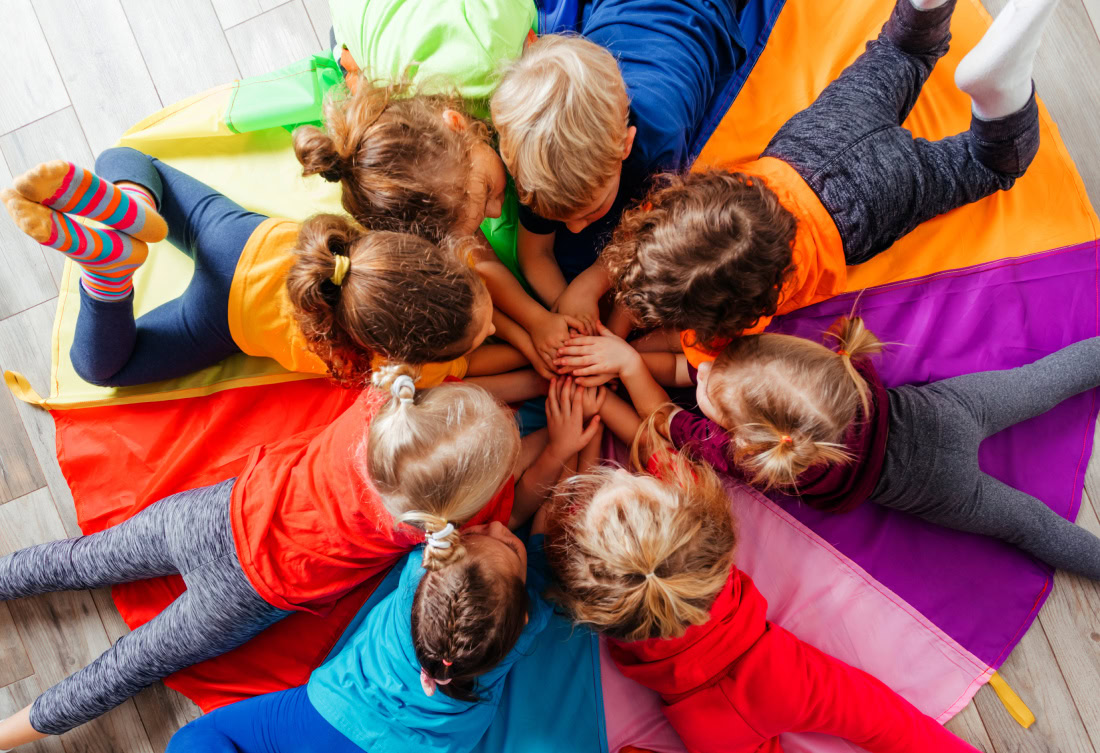
The early years are an important time for children to develop the social and emotional skills they will use throughout childhood and beyond. From learning how to make friends and take turns to expressing their feelings and trying something new, everyday experiences can help children become more confident in themselves and comfortable interacting with others.
For many children, child care provides regular opportunities to practise these skills in a safe and supportive environment. Through play, relationships with educators, group experiences and everyday routines, children can gradually learn how to communicate, cooperate, solve problems and participate alongside others.
At Jacaranda Early Learning Centre, we recognise that every child is different. Some children are naturally outgoing and eager to join a group, while others are more reserved and prefer to observe before getting involved. Our goal is not to make every child the same, but to provide an environment where each child can develop social skills and confidence at their own pace.
What Are Social Skills in Early Childhood?
Social skills are the skills children use to communicate and interact with the people around them. They begin developing from a very young age and continue to evolve as children form relationships and experience different social situations.
For toddlers and young children, social development can include learning how to:
- Communicate their needs and ideas
- Listen and respond to others
- Take turns
- Share and cooperate
- Join play with other children
- Express and manage emotions
- Develop friendships
- Recognise how other people may be feeling
- Navigate disagreements
- Ask for help when they need it
These skills don’t develop overnight. Young children need plenty of opportunities to practise them, make mistakes, observe others and try again.
This is one reason the everyday social environment of an early learning centre can be so valuable.
How Child Care Supports Social Development
Child care brings children together with educators and other children from different backgrounds, personalities and family environments. This gives them regular opportunities to practise social skills through real interactions rather than simply being told how they should behave.
Learning to Interact With Other Children
For some children, child care may be one of their first regular opportunities to spend extended periods with a group of other children.
Through everyday play and activities, children begin learning how to interact with people outside their immediate family.
They might practise:
- Saying hello and introducing themselves
- Joining another child’s game
- Asking to use a toy
- Listening to another child’s ideas
- Taking turns
- Sharing resources
- Working towards a common goal
These interactions don’t always go perfectly – and that’s okay.
A toddler may become frustrated when another child takes a toy, or two children may want to play in completely different ways. With appropriate guidance from educators, these everyday situations become opportunities for children to learn how to communicate and navigate relationships.
Building Friendships
Friendships are an important part of children’s social development and can provide a strong sense of belonging.
Young children’s friendships may look quite different from friendships between older children or adults. Toddlers might move between different play partners, while preschool-aged children may begin developing stronger connections around shared interests.
Through these early relationships, children can learn about:
- Cooperation
- Empathy
- Communication
- Trust
- Sharing experiences
- Resolving disagreements
- Considering other people’s feelings
Having friends can also help children feel more comfortable and confident in their early learning environment.
For children who are initially hesitant to participate, seeing a familiar friend involved in an activity can sometimes make it easier to have a go themselves.
You can learn more about this in our article on how early friendships help children feel confident at school.
Learning to Take Turns and Share
Sharing is something many parents associate with social development, but it is important to remember that it is a complex skill for young children to learn.
Toddlers are still developing their understanding of other people’s perspectives and may find it difficult to wait for something they want.
Child care provides many natural opportunities to practise these skills.
Children might learn to:
- Wait for their turn
- Ask before taking something
- Share toys and materials
- Participate in group games
- Wait while another child finishes
- Find another activity while they are waiting
Educators can help children understand what is happening and provide language they can use to communicate their needs.
Over time, repeated experiences can help children become more comfortable with turn-taking and cooperation.
Developing Communication Skills
Social development and communication are closely connected.
Children need to be able to communicate if they want to join a game, ask for help, express how they feel or tell another child what they would like to do.
As children interact with educators and peers, they have regular opportunities to practise using language in meaningful situations.
For example, a child might learn to say:
- “Can I play?”
- “Can I have a turn?”
- “I don’t like that.”
- “Can you help me?”
- “Let’s build it together.”
- “I’m still using that.”
These may seem like simple phrases, but being able to express needs and ideas can make a significant difference to a child’s ability to participate confidently in social situations.
If you’re looking for ways to support this development at home, our guide to supporting your toddler’s speech and language development includes practical ideas families can try.
Learning to Manage Small Conflicts
Disagreements are a normal part of learning how to interact with other people.
Two children may want the same toy. One child may not want to play the same game as another. A child might feel left out or become upset when someone changes the rules of their game.
While adults naturally want to step in and solve these situations, they can also provide valuable opportunities for children to develop problem-solving and communication skills.
With support from educators, children can gradually learn to:
- Explain what has happened
- Express how they feel
- Listen to another person’s perspective
- Consider possible solutions
- Negotiate and compromise
- Ask an adult for help when needed
The aim isn’t to eliminate conflict. Instead, children can learn that disagreements happen and that there are constructive ways to work through them.
These skills can become increasingly valuable as children grow and their social relationships become more complex.
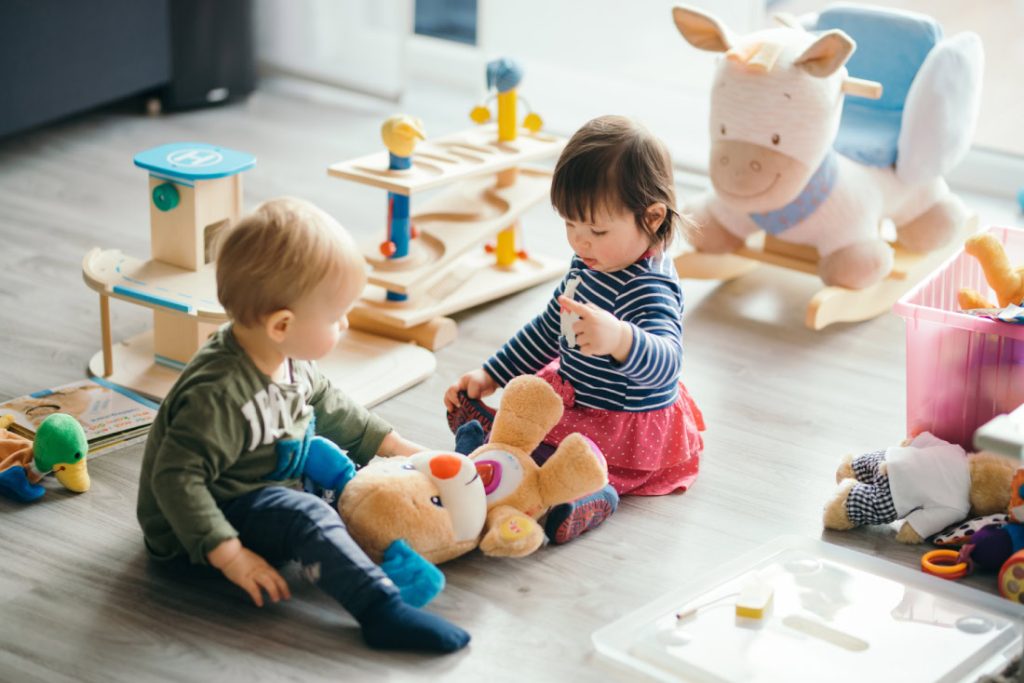
How Child Care Builds Confidence
Social skills and confidence often develop alongside one another.
When children successfully communicate with others, make a new friend, complete a task independently or try something unfamiliar, they experience the satisfaction of knowing they can do things for themselves.
These small experiences can gradually build a stronger sense of confidence and capability.
Encouraging Independence
Child care provides many opportunities for children to develop independence through everyday routines and experiences.
Depending on their age and abilities, children may be encouraged to:
- Put belongings away
- Choose between activities
- Help pack up after play
- Attempt tasks independently
- Participate in daily routines
- Make simple choices
- Ask for assistance when needed
These may seem like small achievements, but they give children opportunities to experience themselves as capable and contributing members of their community.
Educators can provide encouragement while allowing children to attempt age-appropriate tasks for themselves.
Trying New Experiences
Trying something unfamiliar can be challenging for young children, particularly if they aren’t sure whether they will be successful.
An early learning environment provides many opportunities to try something new.
A child might participate in:
- Music and movement
- Creative activities
- Group games
- Outdoor play
- Sensory experiences
- Storytelling
- Imaginative play
- Construction and problem-solving activities
Children don’t need to be successful the first time. Having the opportunity to try, practise and try again can help them become more comfortable with challenges.
Over time, this can contribute to a child’s willingness to have a go at unfamiliar experiences.
Celebrating Effort Rather Than Perfection
Confidence isn’t about getting everything right.
Children can develop a healthier approach to challenges when adults recognise their effort, persistence and willingness to try rather than focusing only on the outcome.
For example, instead of simply saying, “You did it!”, an educator might acknowledge:
“You kept trying even when it was tricky.”
Or:
“You were a little nervous, but you gave it a go.”
This type of encouragement can help children understand that learning involves practice and that it’s okay when something doesn’t work the first time.
Developing Confidence Through Secure Relationships
Children are more likely to explore, participate and try new things when they feel safe and supported.
Positive relationships with trusted educators can provide children with a secure base from which to explore their environment.
When children know there is a familiar adult available to support them, they may feel more comfortable:
- Exploring a new activity
- Approaching another child
- Asking questions
- Expressing their feelings
- Trying something independently
- Seeking help when something feels difficult
Building these trusting relationships is an important part of quality early childhood education and care.
The Role of Educators in Building Social Skills and Confidence
Early childhood educators do much more than supervise children’s activities.
They play an important role in creating opportunities for social learning and helping children understand how to interact with others.
Educators can support social development by:
- Modelling respectful communication
- Helping children recognise and express emotions
- Encouraging cooperation
- Supporting children through disagreements
- Providing opportunities for group participation
- Encouraging children to communicate their needs
- Recognising individual strengths and interests
- Supporting children as they try new experiences
Importantly, educators can adapt their approach to individual children.
An outgoing child who readily joins group activities may need different support from a child who prefers to observe before participating. Understanding these differences allows educators to encourage children without putting unnecessary pressure on them.
You can read more about the role of an educator in early learning and childcare and the ways educators support children’s development.
Supporting Shy or Reserved Children
Not every child is naturally outgoing, and being quiet or cautious isn’t necessarily something that needs to be changed.
Some children take longer to become comfortable in unfamiliar environments. They may prefer to watch an activity before joining in, interact with one or two children rather than a large group, or need additional reassurance when trying something new.
A supportive early learning environment can give these children the time and space they need.
Educators can help by:
- Building trusting relationships gradually
- Avoiding pressure to participate immediately
- Providing opportunities for smaller group interactions
- Following the child’s interests
- Recognising and celebrating small steps
- Allowing children time to observe before getting involved
The goal isn’t to turn every child into an outgoing child.
Instead, it is about helping children develop confidence in communicating, participating and forming relationships in ways that feel comfortable and appropriate for their individual personality and stage of development.
How Play Builds Social Skills
Play is one of the most natural ways for young children to learn and practise social skills.
During play, children aren’t simply having fun. They are communicating, negotiating, solving problems, expressing ideas and learning how other people respond.
For example, imaginative play can involve children deciding who will play different roles and creating a shared story.
Construction play can encourage children to work together, share resources and solve problems.
Group games provide opportunities to practise listening, taking turns and following shared rules.
Outdoor play allows children to interact with others while developing physical skills and navigating shared spaces.
Creative experiences can encourage children to exchange ideas, share materials and talk about what they are creating.
Play-based learning provides a natural environment for these skills to develop because children are actively involved and motivated by the experience.
Jacaranda’s play-based learning approach provides children with opportunities to learn and develop through meaningful play experiences.
Social Skills and School Readiness
Being ready for school involves much more than knowing letters, numbers or how to hold a pencil.
Social and emotional development is also an important part of preparing children for the transition to school.
Children benefit from being able to:
- Listen to instructions
- Participate in group activities
- Communicate with educators
- Ask for help
- Make and maintain friendships
- Take turns
- Manage emotions
- Follow routines
- Try unfamiliar activities
- Work alongside other children
Developing these skills can help children feel more comfortable and confident when they transition into a new classroom environment.
For families preparing for this transition, our school readiness checklist provides further guidance on some of the skills children can develop before starting school.
How Parents Can Support Social Skills at Home
Children’s social development doesn’t stop when they leave child care. Everyday experiences at home can provide additional opportunities to practise these skills.
Encourage Opportunities for Social Play
Playdates, time with siblings and community activities can give children opportunities to interact with other children in different environments.
Practise Turn-Taking
Simple board games, card games and shared activities can help children practise waiting, taking turns and following simple rules.
Talk About Feelings
Help your child put words to emotions by talking about how they feel and discussing how other people might feel in different situations.
Encourage Independence
Give your child age-appropriate opportunities to make choices and complete simple tasks independently.
Model Positive Social Behaviour
Children learn a great deal by watching the adults around them. Demonstrating respectful communication, listening and cooperation provides a powerful example.
Talk Through Problems
When your child experiences a social difficulty, resist the temptation to immediately solve everything for them. Instead, where appropriate, ask questions such as, “What do you think we could do?” or “How could we fix this?”
Read Stories About Friendship and Emotions
Books can provide simple ways to talk about friendship, kindness, feelings and solving problems. Ask your child what they think a character might be feeling or what they could do in a particular situation.
Every Child Develops Social Skills Differently
There is no single way for a child to be socially confident.
Children have different personalities, temperaments, communication styles, interests and levels of comfort in social situations.
One child may enthusiastically introduce themselves to everyone they meet, while another may prefer to observe quietly before joining a group.
Neither approach necessarily indicates a problem.
What matters is that children have opportunities to develop the skills they need to communicate, form relationships, express themselves and participate in experiences.
With time, supportive relationships and plenty of opportunities to practise, children can gradually build confidence in their own abilities.
How Jacaranda Supports Social Development and Confidence
At Jacaranda Early Learning Centre, we understand that social and emotional development is an important part of the early learning experience.
Through play, everyday routines and positive relationships, children have opportunities to interact with their peers, communicate their ideas, develop independence and experience new challenges.
Our educators take the time to get to know each child as an individual, including their interests, strengths, personality and areas where they may benefit from additional encouragement.
We also recognise the important role families play in children’s development. By sharing observations and maintaining open communication between home and child care, families and educators can work together to support each child’s individual needs.
Building Confidence One Experience at a Time
Social skills and confidence aren’t developed through a single lesson or activity.
They grow through hundreds of everyday experiences—a child saying hello to a new friend, asking for help, waiting for a turn, joining a game, solving a disagreement, trying something unfamiliar or proudly completing a task independently.
Each of these small moments provides another opportunity to learn and grow.
At Jacaranda Early Learning Centre, we aim to create a nurturing environment where children can build relationships, explore their interests and develop the social and emotional skills they need for the next stage of their learning journey.
If you’re looking for a Gold Coast child care centre where your child can learn, play, build friendships and grow in confidence, we’d love to welcome you to Jacaranda Early Learning Centre. Book a tour to meet our educators and explore our early learning environment.
Frequently Asked Questions
Does child care help children who are shy?
Child care can provide regular, supportive opportunities for children to interact with others and gradually become more comfortable in social situations. Educators can respect a child’s individual temperament while encouraging small steps towards participation.
At what age do children start developing social skills?
Social development begins from infancy through interactions with parents, carers and other familiar adults. During the toddler and preschool years, children have increasingly complex opportunities to communicate, play with others, form friendships and develop an understanding of emotions.
What if my child doesn’t like sharing?
Sharing is a complex skill that develops gradually. Young children may need support understanding concepts such as waiting, taking turns and considering another person’s needs. Educators can help children practise these skills through everyday play and group experiences.
How can I help my child make friends at child care?
Talk positively about playing with other children and encourage your child to participate in shared activities without putting pressure on them to form particular friendships. If your child is having difficulty socially, talking with their educators can help you understand how they are interacting during the day.
Is confidence the same as being outgoing?
No. Confidence doesn’t necessarily mean being loud or highly social. A quiet child can still be confident if they feel comfortable expressing their needs, asking for help, trying new things and participating in activities at their own pace.
How does child care prepare children socially for school?
Child care gives children opportunities to practise communication, cooperation, independence, emotional regulation, group participation, turn-taking and asking for help. These social and emotional skills can help children feel more comfortable when they transition into the school environment.